The Influence of Algorithmic Designs on Adapting Strategies to Multiple Roulette Formats and Their Associated Promotional Structures
Casey Wagner · Nov 3, 2026
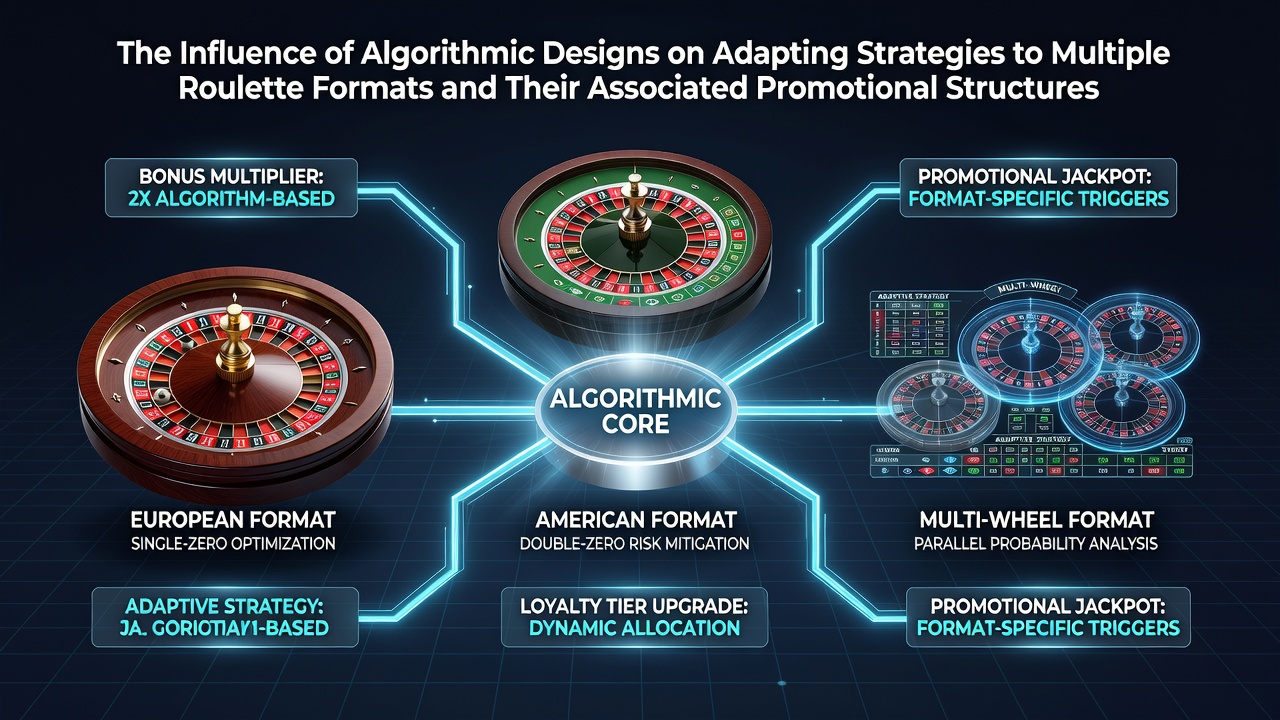
The Influence of Algorithmic Designs on Adapting Strategies to Multiple Roulette Formats and Their Associated Promotional Structures
Algorithmic designs form the backbone of digital roulette systems, where pseudo-random number generators determine outcome sequences in RNG-based versions while live formats combine physical wheels with digital interfaces for result verification, and these mechanisms directly shape how players adjust their betting patterns to different wheel configurations such as European, American, and French variants.
Data from industry analyses indicate that European roulette wheels carry a single zero pocket which algorithms incorporate into return-to-player calculations, whereas American versions feature double zeros that increase the house edge, prompting observers to note corresponding shifts in player approaches that emphasize outside bets or column strategies to manage variance across sessions.
Core Algorithmic Elements in Roulette Platforms
Researchers at academic institutions have documented how linear congruential generators and more advanced cryptographic algorithms underpin fair play certifications, with regulatory bodies like the Nevada Gaming Control Board requiring periodic audits that verify sequence unpredictability, and this verification process influences promotional structures because operators tie bonus eligibility to specific game formats whose algorithmic profiles meet compliance thresholds.
Those who examine platform architectures find that multi-wheel roulette formats deploy parallel RNG instances, allowing simultaneous spins that algorithms synchronize through centralized servers, while promotional offers such as deposit matches often apply wagering requirements calculated according to each format's volatility index derived from these same systems.
Format-Specific Strategy Adjustments
Players frequently adapt Martingale progressions or Fibonacci sequences when switching between formats because European wheels present lower house edges that algorithms reflect in payout distributions, and data shows participants extend session lengths on these variants to capitalize on promotional free spin bundles that algorithms allocate based on prior bet volumes and game selection patterns.
Live dealer environments introduce latency factors that algorithms must account for during result streaming, leading observers to report increased reliance on quick-bet interfaces and pattern recognition tools that account for both physical wheel biases and digital transmission delays, whereas RNG formats enable rapid cycling that supports high-frequency strategy testing without external variables.
Promotional Structures Tied to Algorithmic Profiles
Operators structure rewards around algorithmic metrics such as hit frequency and payout clustering, with deposit bonuses often restricted to formats whose RNG parameters align with marketing targets, and figures from market reports reveal that loyalty programs in November 2026 increasingly segment users according to their engagement with algorithmically distinct games like multi-ball or mini-roulette variants.
According to a report issued by the Australian Communications and Media Authority, promotional wagering contributions vary by format volatility, which algorithms quantify during bonus design phases, and this segmentation encourages participants to rotate across wheel types to meet playthrough conditions efficiently while avoiding formats that algorithms flag for higher risk thresholds.

Regulatory and Technical Intersections in Late 2026
By November 2026 regulatory updates in several jurisdictions have emphasized transparency in algorithmic documentation, requiring operators to disclose RTP ranges for each roulette format so that promotional terms reflect accurate risk profiles, and this requirement has prompted platforms to refine strategy guides that incorporate algorithmic transparency data into player decision frameworks.
Industry associations such as the European Gaming and Betting Association have compiled statistics showing increased adoption of adaptive betting software that interfaces directly with platform APIs, allowing real-time strategy recalibration when algorithms detect shifts in game parameters or when promotional structures change mid-campaign.
Long-Term Effects on Player Behavior Patterns
Evidence from longitudinal studies demonstrates that consistent exposure to multiple formats leads participants to develop hybrid strategies that blend elements from each algorithmic environment, such as combining live dealer observation techniques with RNG probability modeling, and promotional structures often reward this cross-format activity through tiered loyalty multipliers calculated via backend algorithms.
One case examined by researchers at the University of Sydney highlighted how players who tracked algorithmic seed resets across sessions adjusted their bankroll allocation to align with bonus release schedules, resulting in measurable differences in session duration and format preference over extended periods.
Conclusion
Algorithmic designs continue to determine the boundaries within which strategies evolve across roulette formats, and their integration with promotional structures creates measurable pathways for player engagement that regulatory oversight and technical audits maintain in balance. As platforms update systems in response to data from November 2026 onward, the interplay between these elements shapes participation patterns without altering core game mathematics.