Review Examines Licensed Roulette Platforms Available to UK Players in 2026
Casey Wagner · Sep 8, 2026

Review Examines Licensed Roulette Platforms Available to UK Players in 2026
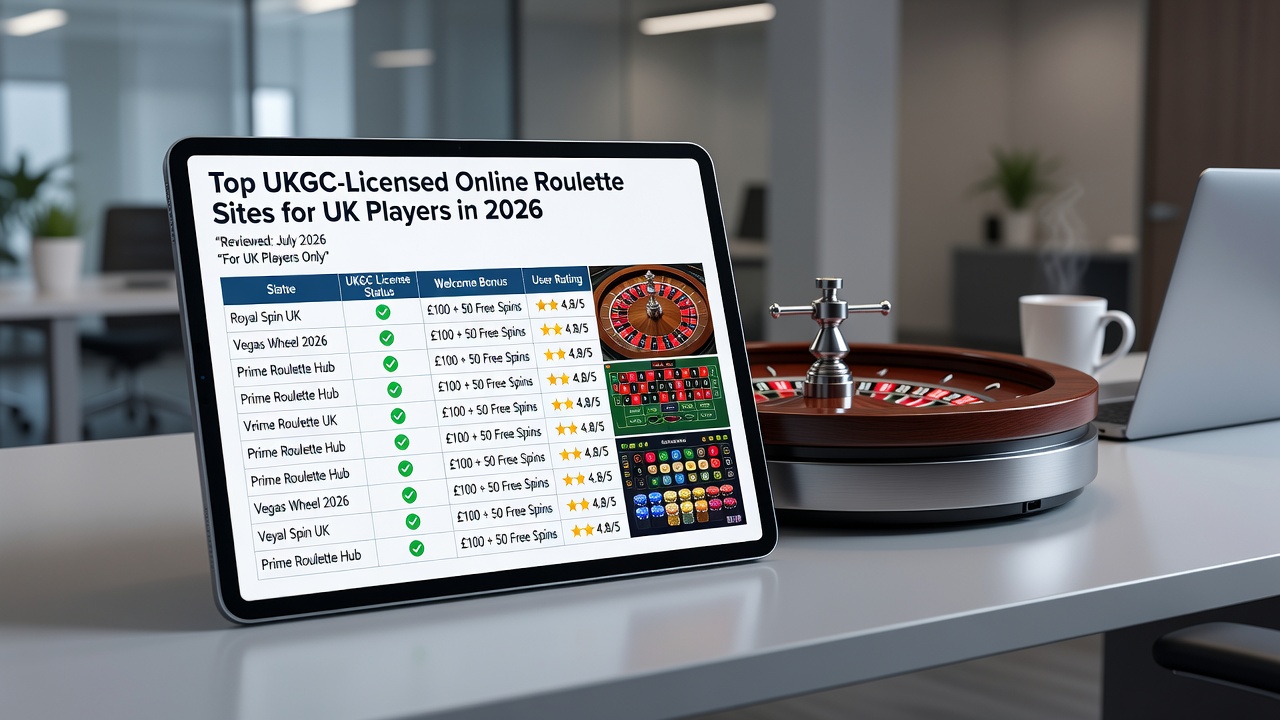
The recent publication from The Sun examines several UKGC-licensed online roulette sites for UK players in 2026 and presents an overview of common betting systems alongside the main game variants, while noting that the house edge prevents any method from ensuring consistent profits. Observers note the article focuses on European, French, and live-dealer formats, each carrying distinct rules that affect payout structures and player choices, and it lists four specific strategies without claiming they overcome the built-in mathematical advantage held by operators.
Variants Featured in the Coverage
European roulette appears first in the review because it uses a single zero wheel, which reduces the house edge compared with the double-zero American version, and the article explains how this layout influences betting options such as straight-up, split, and outside wagers. French roulette receives attention next for its additional rules including la partage and en prison, which return half the stake on even-money bets when zero lands, and the review connects these features to lower overall house percentages under certain conditions. Live-dealer tables close the variant section, where real-time video streams connect players to physical wheels operated by croupiers, and the publication notes that these options combine digital convenience with traditional table dynamics while still operating under the same licensed frameworks.
Strategies Outlined by the Publication
The Martingale system receives detailed coverage as a progression method that doubles the stake after each loss on even-money bets, with the goal of recovering all prior losses plus one unit on the next win, yet the article immediately pairs this description with the reminder that table limits and finite bankrolls can interrupt the sequence. Reverse Martingale follows as the opposite approach, doubling only after wins and resetting after losses, which the review presents as a way to capitalise on short streaks while protecting accumulated gains. Fibonacci comes next, structured around the sequence where each number equals the sum of the two preceding ones, and the article shows how players increase stakes according to this pattern after losses before decreasing after wins. Paroli rounds out the list as a positive progression that doubles after wins for a set number of steps, aiming to lock in profits during favourable runs, and the publication contrasts it with negative systems by highlighting its focus on winning streaks rather than recovery.
Each strategy section in the review includes basic examples of how stakes change across several spins, yet every description ends with the same core statement that the house edge remains constant regardless of the chosen method. Data from the Nevada Gaming Control Board shows that roulette outcomes stay independent from one spin to the next, which aligns with the article's caution that past results do not influence future probabilities. Those who have examined similar systems in academic settings often discover that long-term results converge toward the theoretical house percentage, a point the Sun article reinforces by advising players to treat strategies as structured ways to manage bets rather than guaranteed paths to profit.
Regulatory Context and Player Guidance
The review situates its recommendations within the framework of licensed operators available to UK residents in 2026, and it stresses that all highlighted sites must meet standards set by the relevant authority for fair play and responsible gambling tools. September 2026 marks a period when updated compliance requirements continue to shape site offerings, and the publication notes that players can verify licensing details directly on operator pages before registering. External research from the Australian Institute of Family Studies indicates that clear information about game rules and payout percentages helps users make informed decisions, which matches the article's approach of listing both advantages and limitations of each variant and strategy.
Conclusion
The Sun article therefore compiles factual descriptions of three roulette variants and four progression systems, always returning to the mathematical reality that the house edge persists across all options. Readers encounter concrete explanations of how European, French, and live-dealer formats differ in rules and payout mechanics, together with step-by-step outlines of Martingale, Reverse Martingale, Fibonacci, and Paroli sequences. The publication closes by directing attention back to licensed platforms and the unchanging statistical foundation of the game, leaving any decisions about participation entirely with the individual.